
CLP vs Gun Oil vs Solvent: What's the Difference and Which Do You Need?
CLP vs gun oil vs solvent: what each one does, how they compare, and which you need for an AR-15, a carry pistol or a hunting rifle.
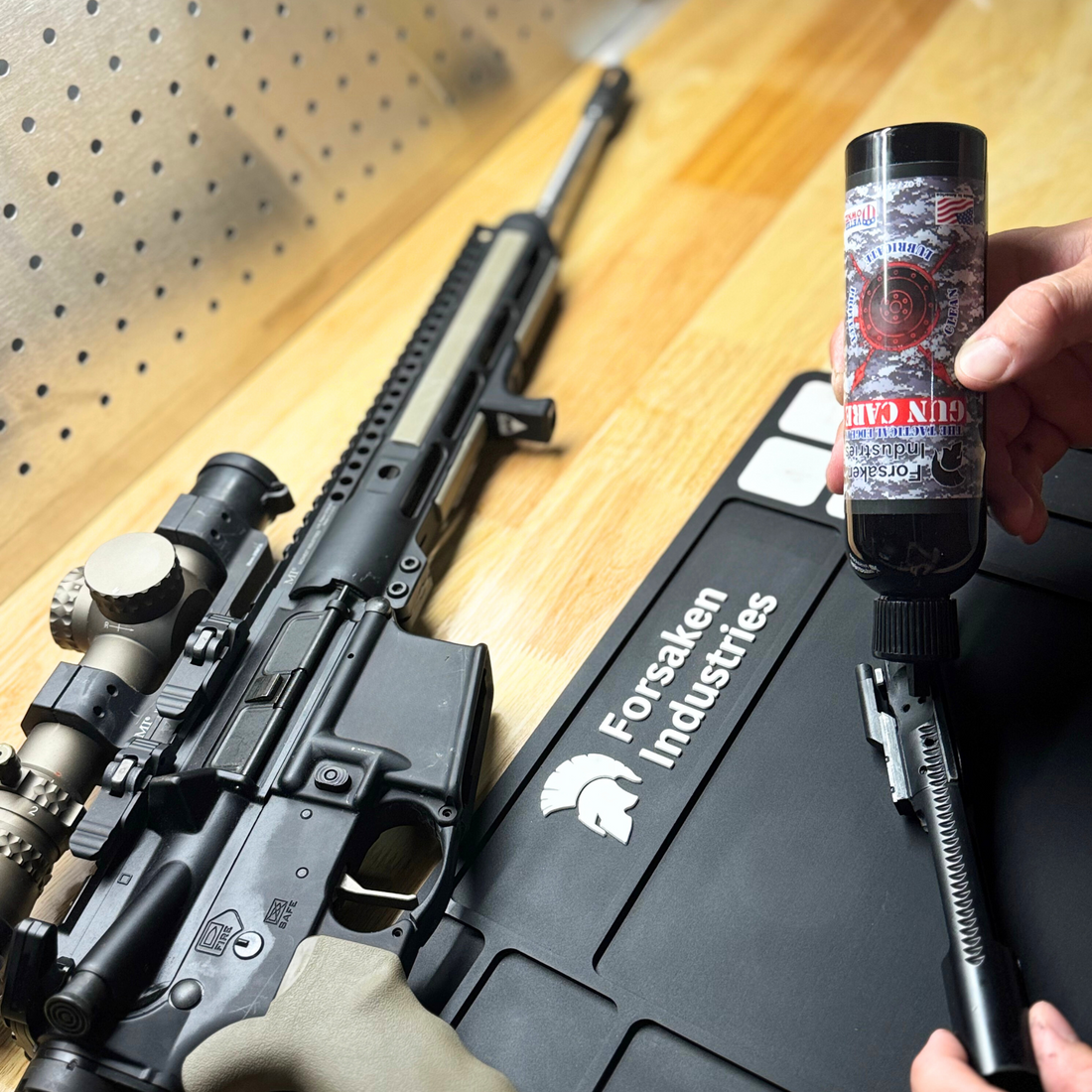
Walk into any gun shop and you will see three kinds of bottles: CLP, gun oil and gun solvent. They overlap, but they are not the same thing. This guide explains what each one does, how they compare, and which ones you actually need for an AR-15, a carry pistol or a hunting rifle.
Quick answer: CLP cleans, lubricates and protects in one step, so it covers routine maintenance for most guns. Gun oil only lubricates. Solvent only cleans, and it is the strongest option for heavy carbon, copper or lead fouling. Many shooters run CLP for everyday cleaning and keep a solvent on hand for deep cleans.
What Each Product Does
CLP (Cleaner, Lubricant, Protectant)
CLP is a multi-purpose formula. It loosens carbon and powder residue, leaves a lubricating film on moving parts, and protects metal from rust. It was developed for the military so troops could maintain weapons with a single product. New to CLP? Start with What Is CLP and How to Use It.
Gun oil
Gun oil is a lubricant. It reduces friction on slides, rails, bolt carriers and triggers. Most gun oils do very little cleaning, and some offer limited rust protection unless the label says otherwise.
Gun solvent (bore cleaner or carbon cleaner)
Solvent is a dedicated cleaner. It breaks down baked-on carbon, and some formulas also target copper or lead fouling in the bore. Solvent does not lubricate, so you always follow it with a lube or CLP.
CLP vs Gun Oil vs Solvent: Comparison
| Feature | CLP | Gun Oil | Solvent |
|---|---|---|---|
| Cleans carbon | Yes, light to moderate | Minimal | Yes, strongest |
| Lubricates | Yes | Yes | No |
| Protects from rust | Yes | Some formulas | No |
| Steps needed | One | Needs a cleaner first | Needs a lube after |
| Best for | Routine cleaning, field and range use | Lubrication only, high-wear points | Deep cleans, heavy fouling, suppressor hosts |
CLP vs Gun Oil
The big difference is cleaning. Gun oil lubricates, but it does not do much to remove fouling, so you need a separate cleaner. CLP does both and adds rust protection, which is why many shooters replace their oil with CLP entirely.
When gun oil or grease still makes sense: some shooters prefer a dedicated oil or grease on high-pressure contact points, competition pistols that see thousands of rounds, or rifles that run hot. If you are comparing specific lubricants, see Best Gun Oil and Lube: CLP vs Oil vs Grease.
CLP vs Gun Solvent
Solvent wins on cleaning power. CLP wins on convenience. For routine maintenance, CLP is enough. When carbon is baked on, a solvent removes it faster with less scrubbing.
Use CLP when:
- You are cleaning after a normal range session
- You are cleaning in the field or want one bottle in your range bag
- You are maintaining a carry gun, truck gun or home defense gun
- You are wiping down guns for storage
Use solvent, then CLP, when:
- You shot several hundred rounds, especially suppressed
- The AR-15 bolt tail, carrier interior or star chamber has hard carbon
- You see copper streaks in the bore after high round counts
- You are doing a periodic deep clean
For the full deep-clean process, read How to Remove Carbon Fouling from a Gun.
Is CLP Enough for an AR-15?
For routine maintenance, yes. CLP cleans, lubricates and protects an AR-15 well after a normal range day. The AR's direct impingement gas system pushes a lot of carbon into the bolt carrier group, though, so after heavy shooting or suppressed use, a carbon solvent will save you a lot of scrubbing. A simple routine:
- Spray the bolt carrier group with carbon cleaner and let it soak.
- Scrub the bolt tail, carrier interior and firing pin.
- Clean the chamber and lugs with a star chamber pad.
- Wipe everything dry.
- Lubricate the bolt, gas rings, cam pin and carrier rails with CLP.
Does CLP Prevent Rust as Well as Oil?
A good CLP leaves a thin protective film that blocks moisture, and for most storage and carry situations it protects as well as or better than plain gun oil. For long-term storage in humid places, re-apply every 60 to 90 days and control humidity in your safe. See How to Keep Guns from Rusting in a Safe.
FAQ
Can I use CLP and solvent together?
Yes, and many shooters do. Use solvent to break down heavy fouling, wipe it off, then apply CLP to lubricate and protect.
Can I use CLP instead of gun oil?
For most firearms, yes. CLP lubricates moving parts and adds cleaning and rust protection that plain oil does not.
Is bore cleaner the same as CLP?
No. Bore cleaner is a solvent made to remove fouling from the barrel. It does not lubricate or protect, so finish with CLP.
Is CLP safe on Cerakote and polymer?
Quality CLPs are generally safe on modern finishes. Forsaken Industries CLP is safe on polymer, Cerakote and wood. Always check the label of any product you use.
Build a simple two-bottle kit: Forsaken Industries CLP for everyday cleaning and lube, and Forsaken Industries Carbon Cleaner for deep cleans. Both are veteran-built, non-toxic and odorless.