
What Is CLP and How to Use It: The Complete Gun Owner's Guide
What CLP is, whether it is enough to clean a gun, whether it works as a lube, and exactly how to use it on a pistol, AR-15 or shotgun.
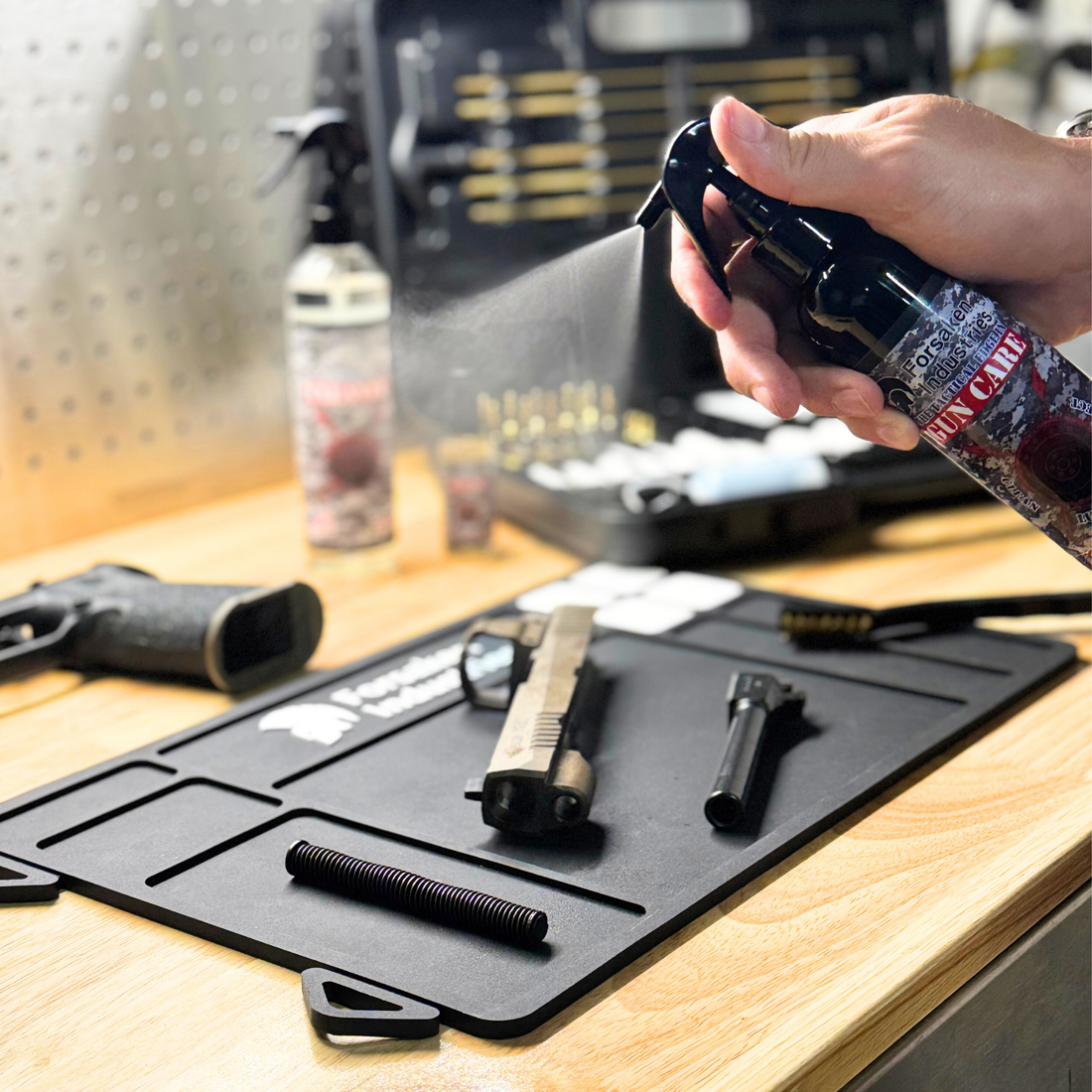
CLP (Cleaner, Lubricant, Protectant) is the one bottle most gun owners can run their entire maintenance routine on. This guide covers everything in one place: what CLP is, whether it is enough to clean a gun, whether it works as a lube, and exactly how to use it on a pistol, an AR-15 or a shotgun. It is written by a combat veteran who has relied on CLP in the field and at the bench.
Quick answer: Apply CLP to a patch or brush, scrub the bore and action to loosen carbon, wipe everything dry, then put a thin coat back on the moving parts and exterior metal. For routine cleaning after a range day, CLP is all you need. For heavy, baked-on carbon, add a dedicated carbon cleaner first.
What Is CLP?
CLP stands for Cleaner, Lubricant and Protectant. It is a single formula built to do three jobs:
- Clean: loosen carbon fouling, powder residue and grime so it wipes away
- Lubricate: leave a film that reduces friction on slides, rails, bolts and triggers
- Protect: block moisture so metal does not rust
CLP was developed for military use, where soldiers needed one product that could keep rifles, pistols and machine guns running in sand, heat, cold and rain. The U.S. military specification for it is MIL-PRF-63460. If you want the full story on the military side, read What CLP Does the Military Use?
Is CLP a solvent?
Partly. CLP has cleaning agents that soften and lift carbon, so it works like a light solvent. It is not as aggressive as a dedicated carbon or copper solvent, which is why heavy fouling sometimes needs a stronger product. See our comparison of CLP vs gun oil vs solvent for the full breakdown.
Is CLP Enough to Clean a Gun?
Yes, for routine maintenance. After a normal range session, CLP removes carbon, powder residue and dirt, then leaves the gun lubricated and protected in the same pass. For most shooters, it replaces a separate cleaner, oil and rust preventive.
You may want a dedicated cleaner when you are dealing with:
- Heavy, baked-on carbon on an AR-15 bolt tail or inside the carrier
- Suppressor carbon buildup (see How to Clean a Suppressor)
- Copper or lead fouling in the bore after high round counts
- A gun that has gone a long time without cleaning
In those cases, break the fouling down with Forsaken Industries Carbon Cleaner, wipe it off, then finish with CLP to lubricate and protect. Our guide on how to remove carbon fouling from a gun walks through that process step by step.
Can CLP Be Used as a Lubricant?
Yes. A quality CLP leaves a thin lubricating film behind after it cleans, so you do not need a separate oil for most guns. Three common myths come up a lot:
- "The cleaner and the lube cancel each other out." In a well-made CLP, the cleaning agents and lubricants are balanced to work together. The cleaning side lifts fouling and the lube film stays behind.
- "CLP causes jams." Jams usually come from too little lube, too much lube, carbon buildup or magazine and ammo problems. Applied correctly, CLP helps reliability. See Why Does My Gun Keep Jamming?
- "CLP attracts dirt." Any lube attracts dirt if you over-apply it. Use a thin coat and wipe off the excess.
When does a separate lube make sense? Some shooters prefer grease on high-pressure, high-wear contact points or on guns that run very hot and wet, like suppressed rifles. For a full comparison, see Best Gun Oil and Lube: CLP vs Oil vs Grease.
How to Use CLP: Step by Step
Safety first: unload the firearm, remove the magazine, and visually and physically check that the chamber is empty. Keep ammunition out of your cleaning area.
What you need
- CLP (a needle-tip bottle makes precise lube points easy)
- Cleaning rod, bore brush and patches
- Nylon brush and cotton swabs
- A clean rag
- A magnetic cleaning mat so pins and springs do not roll away
Step 1: Field strip
Take the gun apart to the level your owner's manual recommends for routine cleaning. Lay the parts out on your mat.
Step 2: Apply CLP and let it work
Wet a patch or brush with CLP and coat the bore, chamber, breech face, bolt or slide, and any area with visible carbon. Give it a few minutes to soak in and soften the fouling. Heavier carbon needs more time.
Step 3: Clean the bore
Run a CLP-wet bore brush through the barrel from the chamber end toward the muzzle when your firearm allows it. Follow with CLP-wet patches, then dry patches, until they come out mostly clean.
Step 4: Scrub the action
Use the nylon brush and swabs on the bolt, slide rails, breech face, extractor area and feed ramp. Wipe away the loosened carbon with a rag.
Step 5: Wipe dry
Wipe every part so you remove the dirty CLP along with the fouling it lifted. This step matters. Leaving dirty fluid behind is how sludge builds up.
Step 6: Re-lubricate
Apply a thin, fresh coat of CLP to the moving parts and contact points listed below. A drop goes a long way.
Step 7: Protect and reassemble
Wipe a light film over exterior metal for rust protection, reassemble, and cycle the action by hand a few times to spread the lube. Function check before you load it.
Where to Put CLP on a Pistol
- Slide rails (frame and slide)
- Barrel hood and the outside of the barrel where it contacts the slide
- Locking block or barrel lug area
- A small amount at the trigger connector or trigger bar contact point
Keep CLP out of the firing pin channel on striker-fired pistols unless your manufacturer says otherwise. For a Glock walkthrough, see How to Clean a Glock.
Where to Put CLP on an AR-15
For the AR, clean the upper and lower separately. Pay extra attention to the bolt carrier group, where most carbon collects.
Lightly lubricate:
- Inside of the upper receiver
- Bore and chamber (thin film, then a dry patch)
- Lower receiver internals and trigger group
- Buffer and buffer spring
Generously lubricate:
- Bolt body and bolt gas rings
- Cam pin
- Carrier rails (the wear marks on the carrier show you where)
Clean the chamber and locking lugs with a star chamber pad, since a regular patch will not reach those recesses.
Where to Put CLP on a Shotgun
- Action bars and receiver rails on pump guns
- Bolt and carrier on semi-autos
- Hinge points on break-actions
- Choke tube threads (thin coat to prevent seizing)
How Often Should You Use CLP?
- After every range session or any time the gun gets wet
- Every 60 to 90 days for guns in storage, as a wipe-down and re-lube
- More often for carry guns exposed to sweat, and for guns used in humid, salty or dusty environments
For storage tips, see How to Keep Guns from Rusting in a Safe.
How to Choose a Good CLP
Not every CLP performs the same. Look for one that:
- Breaks down carbon without heavy scrubbing
- Leaves a lube film that does not dry out or gum up quickly
- Protects against rust in humid conditions
- Is safe on the finishes you own, such as polymer, Cerakote and anodized aluminum
- Has low odor if you clean indoors
There are plenty of established CLPs on the market, including Break-Free CLP, the long-time military standard. Forsaken Industries CLP is veteran-built, non-toxic and odorless, and comes in a 1 oz needle bottle, 4 oz squeeze and pump bottles, and 8 oz squeeze and trigger spray bottles.
CLP FAQ
What does CLP stand for?
Cleaner, Lubricant, Protectant. Some brands use "Preservative" instead of "Protectant." It means the same thing.
Can I use CLP on a suppressor?
Use CLP on the host firearm and on suppressor mounts and threads. For cleaning the inside of a suppressor, follow your manufacturer's instructions, since sealed and serviceable cans are handled differently.
Does CLP remove rust?
CLP can lift light surface rust with a patch or soft brush, and it helps prevent new rust. Deeper rust needs dedicated treatment.
Can I use CLP on wood and polymer?
Quality CLPs are generally safe on polymer frames and finished wood, but check the product label. Forsaken Industries CLP is safe on polymer, wood and Cerakote.
How much CLP should I use?
Wet generously to clean, then wipe dry, then apply a thin coat to lubricate. If it is dripping, you used too much.
Ready to simplify your cleaning kit? Shop Forsaken Industries CLP, built by a combat veteran for shooters who need their guns to run.